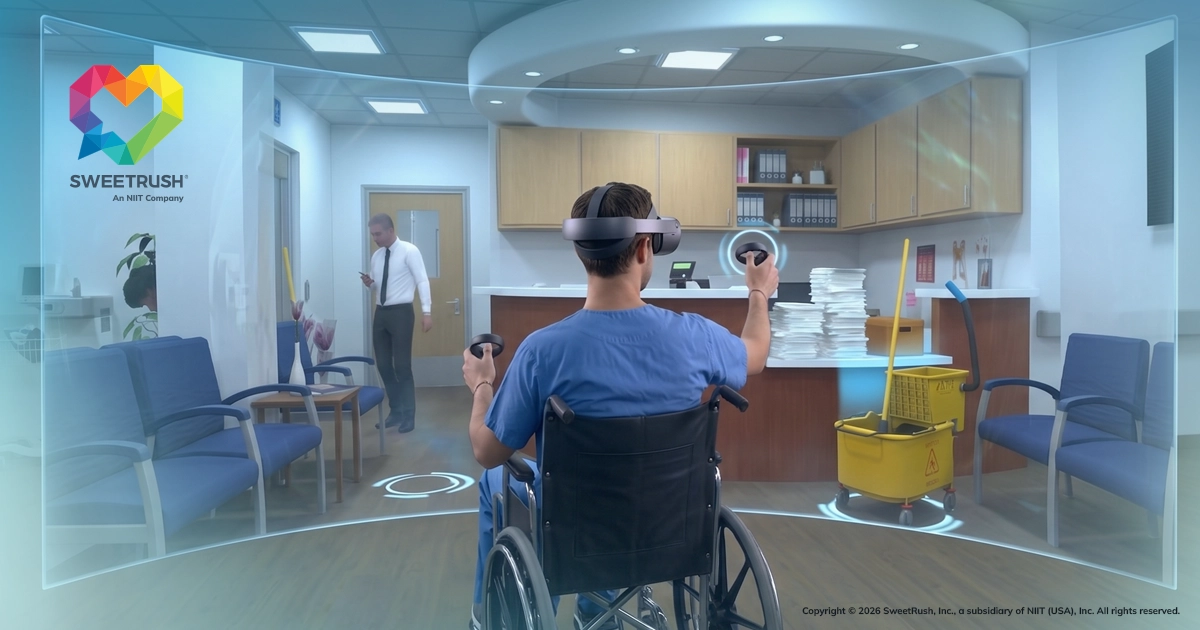

How does an office visit feel from the other side of the stethoscope?
The American Association of Family Physicians (AAFP) invites its 130,000+ members on a journey to find out for themselves in Empathy and Accessibility in Medical Spaces. This collection of gripping virtual reality (VR) simulations mirror the experiences of patients with mobility, sensory, and hearing challenges.
As learners navigate the 3D digital office spaces, they deepen their empathy for their patients and develop newfound insight about the barriers they face as they attempt to access medical care—and the profound difference that spaces designed with them in mind can make. After the experience, learners transform empathy into action as they identify barriers in their own offices and create a concrete plan for a more accessible environment.



130,000+ family physicians, residents, and medical students across all 50 U.S. states

Learners trained in VR develop soft skills 4x faster than learners trained in the classroom—and feel 40% more confident in applying what they've learned.
Critical for an empathy-based experience like this one, they’re also 3.75x more emotionally connected to the content and 4x more focused during the learning experience. (Likens and Mower for PwC, 2022)
Medical staff who learned new procedures in VR had an 80% retention rate one year later—versus 20% one week later using traditional methods. (Gaudiosi, 2015)
83% of surgeons trained in VR were ready to perform procedures with little guidance after training—versus a staggering 0% using traditional methods. (Takahashi, 2019)

Anyone would have difficulty with the physical and emotional burden of navigating an inaccessible environment not designed for them. And when patients enter a medical office that is difficult to navigate or occupy because of its design, they may feel unwelcome, undervalued, and even discouraged from visiting their physicians. Combined, these negative experiences can contribute to appointment cancellations and no-shows that worsen patients’ health outcomes.
The AAFP-SweetRush team knew that family physicians are empathetic practitioners who seek to improve their patients’ quality of life. They also knew that it can be difficult for individuals who haven’t had to experience an inaccessible environment to imagine what it’s like for those who have.
To attain the “a-ha” moments that lead to real change, these caring practitioners needed to understand the physical and emotional impact of barriers such as:
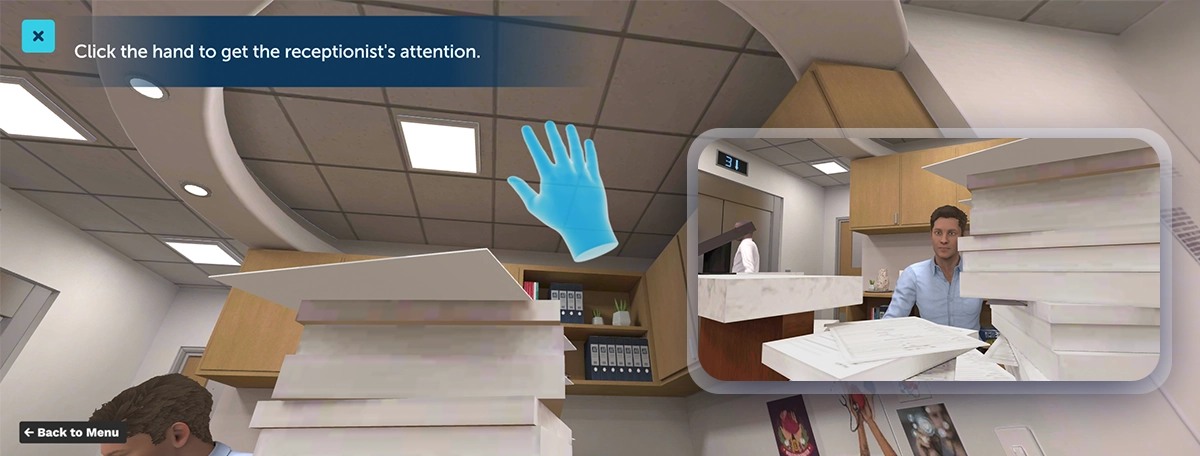
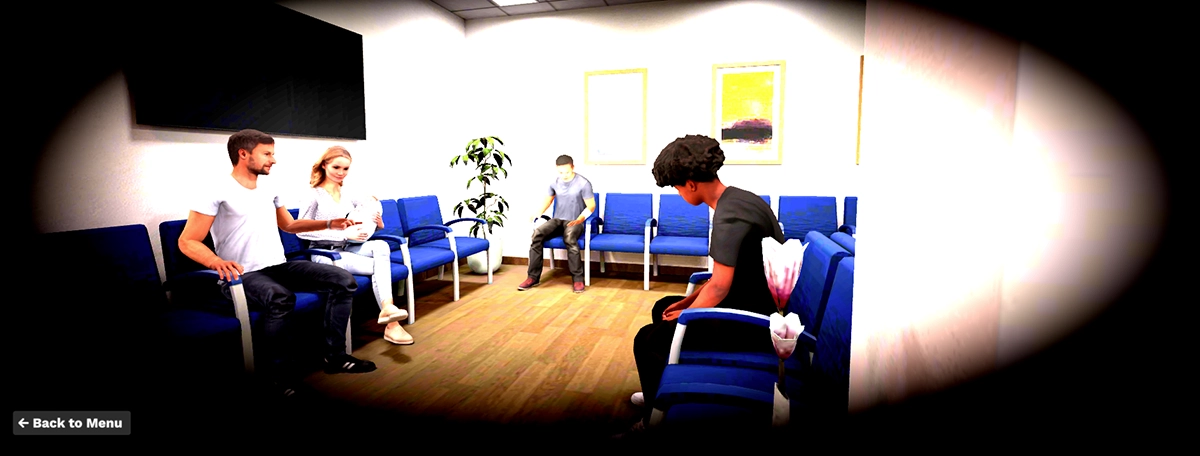
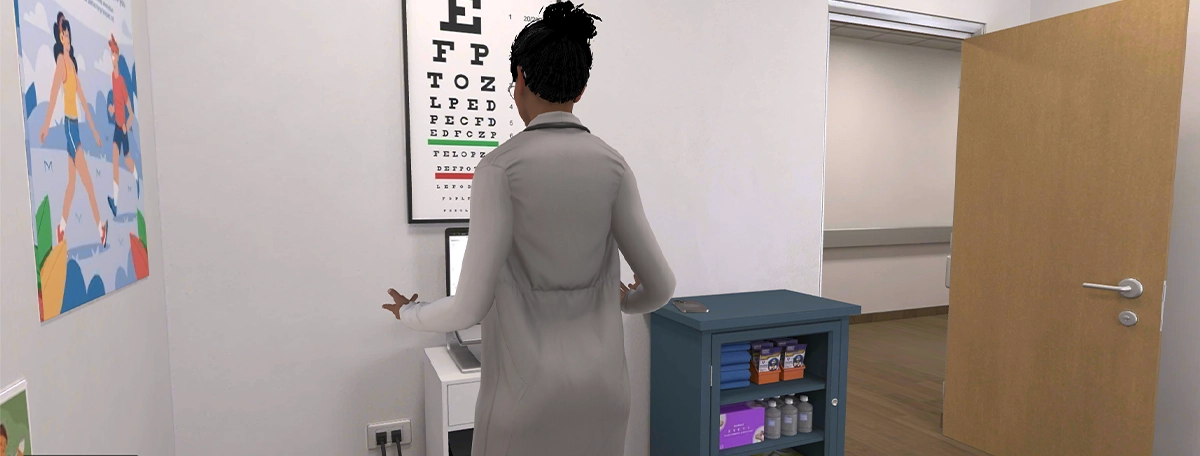
The team knew that, to truly make an impact, they would need to approach accessibility training in an entirely new and unexpected way.
Moving away from telling physicians about accessibility guidelines and into feeling the patient experience required immediacy, emotional resonance, and firsthand experience. In short, AAFP had a great case for immersive simulations.
Get an insider’s look at the hyper-realistic, emotionally gripping simulations that resonate with AAFP’s member audience of 130,000+ family physicians. To read more, download the full case study.
Firsthand experience is the best way to understand someone else’s experience—and the 3D virtual reality (VR) environment is the next best thing. As the AAFP-SweetRush team designed this collection of first-person VR empathy training simulations, the goal was not simply to teach accessibility concepts, but to help physicians feel how the physical and sensory environment can shape access, communication, trust, and care.
Get a learner’s-eye view of the immersive simulations that move family physicians from awareness of accessibility challenges to concrete action in their own practices.


.avif)
Connect with our industry experts on the subjects that matter most to you.
SweetRush delivers innovative learning and development solutions, including custom eLearning, immersive training, and talent development strategies.


