Live Experiential Learning: Immersion > Information Overload
Live Experiential Learning (LEL)
XR
In our 2026 Trends Report we’ve touched on a few best practices we’ve learned as we hone our approach to LEL. Below are the details behind the lessons learned:
Incorporate small-group learning: Degreed research finds that learners specifically gravitate toward small groups (23%) or one-on-one sessions with peers (19%). While whole-group presentations and events are energizing and inspiring, be sure to follow them with a small-group session to process and apply. (If you’re curious about how that might look in practice, check out the three case studies in this article.)
Establish psychological safety: For social and collaborative learning to work, we must establish a foundation of psychological safety. This isn’t a “woo” recommendation; it’s based in science. Research demonstrates the negative impacts of stress upon higher-order thinking and memory as our brains switch into survival mode. Through Project Aristotle, a project focused on identifying what boosts individual and team performance, Google discovered that the ability to speak up without fear of embarrassment was the single most important factor impacting a team’s success.
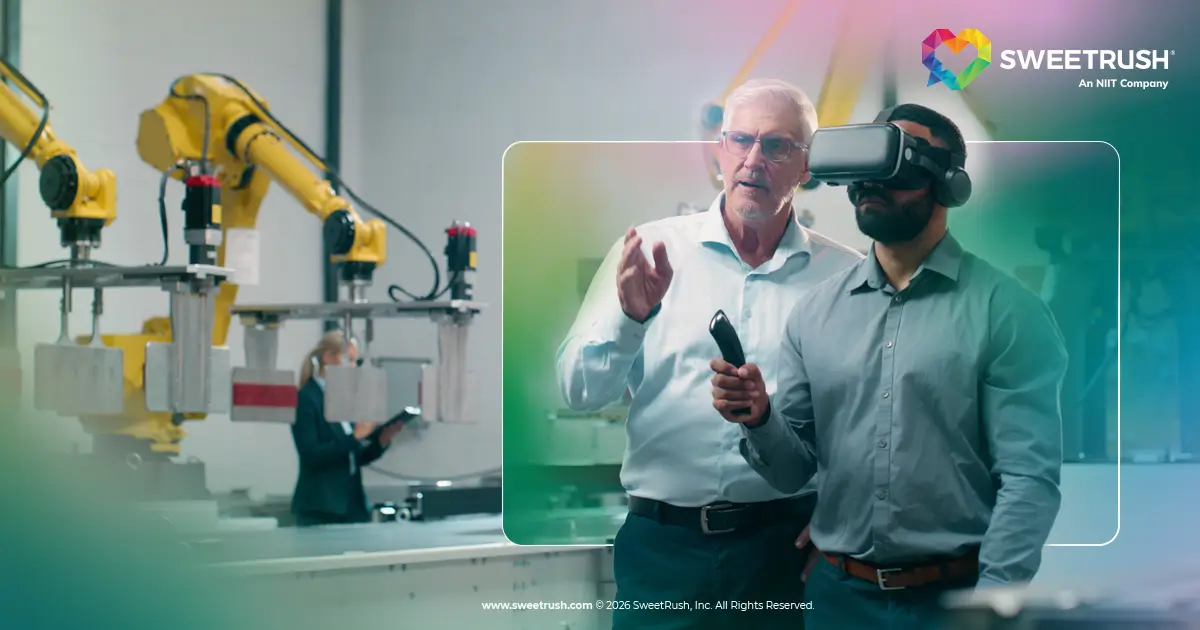
Offer a safe, authentic practice space: Create simulations that offer learners a "sandbox" environment where they can test-drive newly acquired skills. With the risk of harming people, property, and relationships out of the picture, learners are freed to take risks, try new approaches, and fail safely. This spirit of experimentation, and even play, fosters innovation and deeper understanding. When learners engage in an immersive 3D simulation in augmented or virtual reality (AR or VR), retention and competence skyrocket. That advantage holds true for a range of skills, from neurosurgery to interpersonal.
Personalize with AI:Leverage AI to generate adaptive simulations that respond to learners’ performance in real time by leveling up the challenge or adding scaffolded support. With a knowledge base and a clear set of prompts, we can create simulations that deliver surprise and variability, just as real life does. Learners confront a wider range of situations and challenges than they could experience in real life and receive real-time feedback from an AI coach as the simulation conditions respond to their words and actions.
Incorporate ritual, ceremony, and reflection: Consider graduation and other rites of passage: These moments signal a psychological shift, marking a clear "before" and "after." By adding ritual to an LEL journey, we signal to the learner that this journey is a true life event. By adding energetic, inspiring opening and closing ceremonies and regular opportunities to reflect in small groups, with coaches, or individually, we help learners process the experience and cement their XQ for the long term.
At the end of the day, the goal is to bridge the gap between "knowing" and "doing," ensuring every learner emerges and is ready to navigate the complexities of the modern workplace with confidence.
These lessons are just the beginning. If you’re ready to dive deeper into how Live Experiential Learning explore the full 2026 Trends Report. Discover the data, the frameworks, that are defining the next era of professional development.
Share
Contributors
Tiffany Vojnovski
Senior Learning Strategist
Subscribe to our newsletter
Connect with our industry experts on the subjects that matter most to you.
Continue the conversation from our 2026 Trends Report and discover how L&D leaders are leveraging RAG and Context Engineering to build scalable environments.
Bridge the gap between training and performance with Conversational AI. Create an adaptive learning ecosystem that scales expertise and meets learner needs.
Adaptive Learning
AI for L&D
Custom Learning
Tiffany Vojnovski
SweetRush Newsletter
Keep pace with your peers— get the latest L&D innovations and insigths!
Thanks for sharing with us! We appreciate your interest in SweetRush. Soon, your inbox will receive the wisdom of the ages—the modern, culture, and disruptive ages, that is.
Oops! Something went wrong while submitting the form.
We use cookies to make your SweetRush experience even sweeter!
They help with things like remembering your preferences and making sure everything runs smoothly. We also use Hotjar to record sessions and track specific behaviors. Visit our Privacy Policy for more information.