
If you’ve ever wished you could bottle someone’s expertise, custom AI tools are the next best thing: They can’t replace the inimitable, unpromptable human, but they can extend the reach of a human’s expertise…and even a bit of their personality.
How? By engaging SMEs just as we’ve always done. With AI, though, instead of downloading their wisdom to create storyboards, scripts, and other static content, we download their wisdom to “train” a large language model (LLM). (For more details on this process, visit Trend 3 and its companion article.)
For example, to create an AI coaching experience, we’d train the LLM to recognize examples and nonexamples of a skill, why each is a hit or a miss, and provide targeted feedback in response to a learner’s performance. If you’ve got a SME who’s a bit of a character, you can infuse their signature jokes, sayings, and encouraging tone into the coaching interaction.
Alongside these touches of joy and humor, we can leverage AI’s rich data analytics capabilities to maintain a detailed record of each learner’s journey, tracking their performance, growth, and sticking points. This depth of data enables the AI to offer genuine hyper-personalization as it adapts learning content, level of challenge, and feedback in real time.
As adaptive as AI may be, and as playful or engaging its tone, AI should never stand in for interactions where unpromptability and human interactions are must-haves. As a social species, human-to-human contact is indispensable to our well-being and resilience.
As L&D teams and budgets become leaner, it’s tempting to double down on automated flow-of-work learning. The numbers seem to support it: If we design custom AI tools to engage and interact with learners, we can reap the benefits of conversational learning (and up to a 250% ROI, in some cases).
That’s a great outcome to aim for, and we encourage it wholeheartedly! There are plenty of use cases for AI in the flow of work—and our learners will appreciate the ease of access and quality of information they offer.
But it’s important to remember that AI conversational learning tools must remain part of a larger blended learning journey that also makes space for social and live experiential learning (LEL).
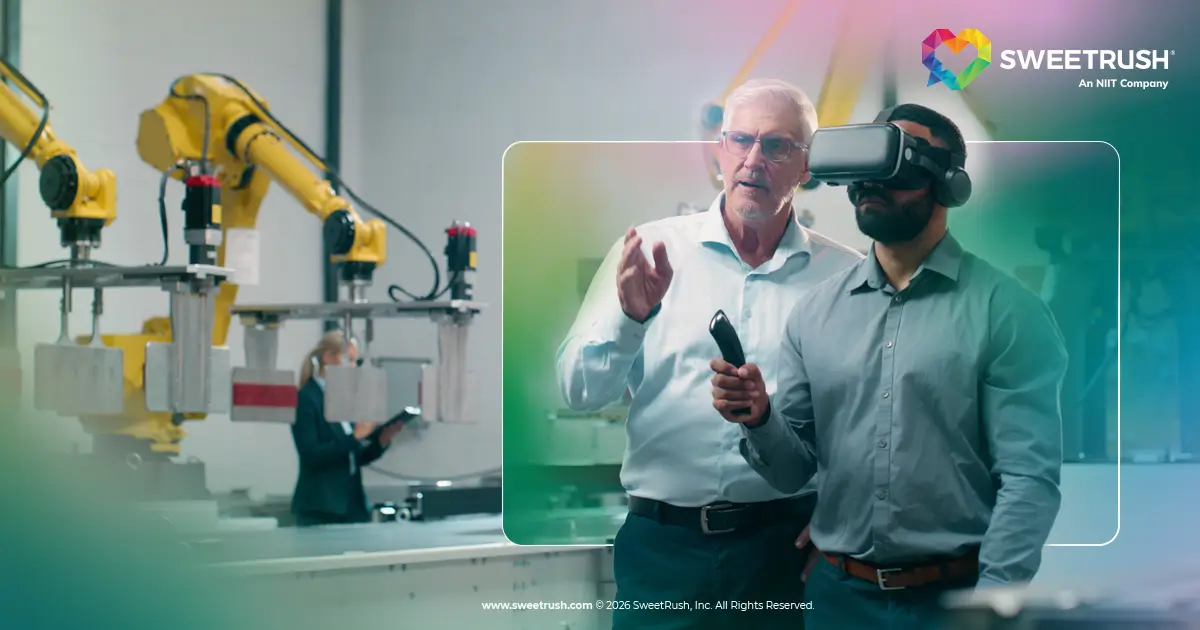
Leveraging AI to handle flow-of-work support enables human experts to engage with learners where it matters most: in the creative, connective, and strategic conversations that require their focus and unpromptability.
In 2026 and beyond, a critical component of our evolving role as L&D leaders will be in striking this balance and championing a blended, but not exclusive, approach to AI. As we continue to make recommendations that leverage organizational resources responsibly and creatively, differentiating between performance needs that can be addressed with AI from those that require human interaction will be paramount. After all, from parent and child to Socrates and his disciples, human-to-human exchange is the original conversational learning modality.
We’d love to help you develop a balanced portfolio of human- and AI-powered flow-of-work learning experiences. Reach out to our unpromptable human experts to explore the possibilities.



Connect with our industry experts on the subjects that matter most to you.


SweetRush delivers innovative learning and development solutions, including custom eLearning, immersive training, and talent development strategies.


