
Calendar icon
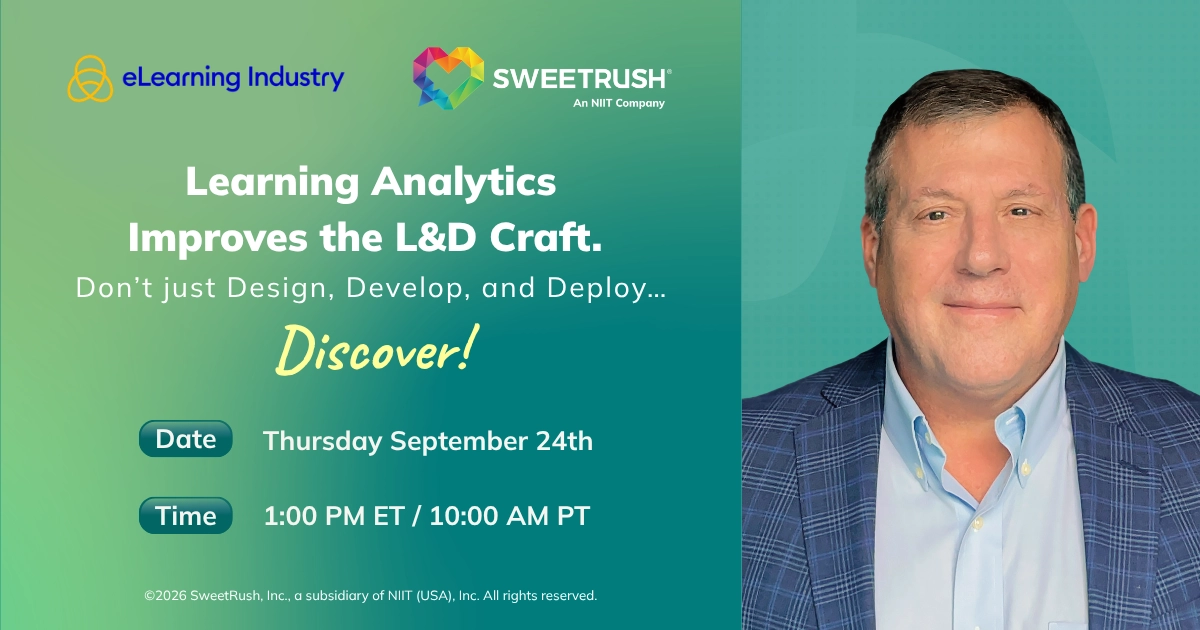
September 24, 2026
Time icon
1:00pm EDT / 10:00am PT

Learning Analytics Improves the L&D Craft. Don’t just Design, Develop, and Deploy…Discover!

Learn how L&D leaders can capture real-time learner signals, move beyond simple completion metrics, and continuously refine their learning strategy

user icon
John Cleave

The craft of L&D is to make learners somehow better. To do this, we identify a learning need, design and develop a learning experience (LX), and deploy it. Far too often, we learn little thereafter about how the LX actually impacted learners beyond status (# not started, in progress, completed) and possibly a score. We discover nothing. So each subsequent attempt remains a first-best guess. L&D is a process. If we take pride in our craftsmanship, we learn from each LX we deploy, so the next one is always better. Observing how learners think, feel, and behave while they’re in an LX helps us become steadily smarter at our craft.

In this session, John describes a number of practical ways you can capture insight into what learners are thinking, feeling, and doing while engaged in LX, to better determine what’s working and what needs refinement, as well as to grow your L&D expertise.

Learning objectives:

The hope is that you leave this session with ideas on how to…

  • Identify initial data points that could shed light on LX impact: Articulate the intended outcomes of an LX, then devise data that might suggest progress towards them, before you dive into design and development.
  • Embed data collection methods in an LX: incorporate components in an LX for the purpose of collecting data, such as knowledge checks, what-ifs, case-study decisioning, and pulse surveys to capture real-time signals about learner knowledge, confidence, and attitudes.
  • Use simulations to generate LA data: they can capture invaluable data on learner decisions and reasoning in real-world situations—no brainer, always capture learner decisions when you include one in an LX. We think about simulations as a safe space to practice with coaching, but consider them from a learning analytics standpoint: you might include one in a curriculum only for the purpose of learning analytics (e.g., a capstone activity or skill assessment).
  • Build your learning analytics strategy on your tech stack: you probably have to obtain all your data using available tools (LMS, LRS, CMS, SharePoint, Google Analytics, survey tools, logs, spreadsheets, and so on). You might be surprised at what useful Learning Analytics data you can yield, even with limited means.
CTA Save My Seat

Save your seat

Thank you! Your submission has been received!
Oops! Something went wrong while submitting the form.

By subscribing you agree to with our Privacy Policy.
Subscribe to our newsletter

Connect with our industry experts on the subjects that matter most to you.

SweetRush Newsletter

Keep pace with your peers— get the latest L&D innovations and insigths!

By subscribing you agree to with our Privacy Policy.

Thanks for sharing with us!
We appreciate your interest in SweetRush.
Soon, your inbox will receive the wisdom of the ages—the modern, culture, and disruptive ages, that is.

Oops! Something went wrong while submitting the form.
John Cleave